
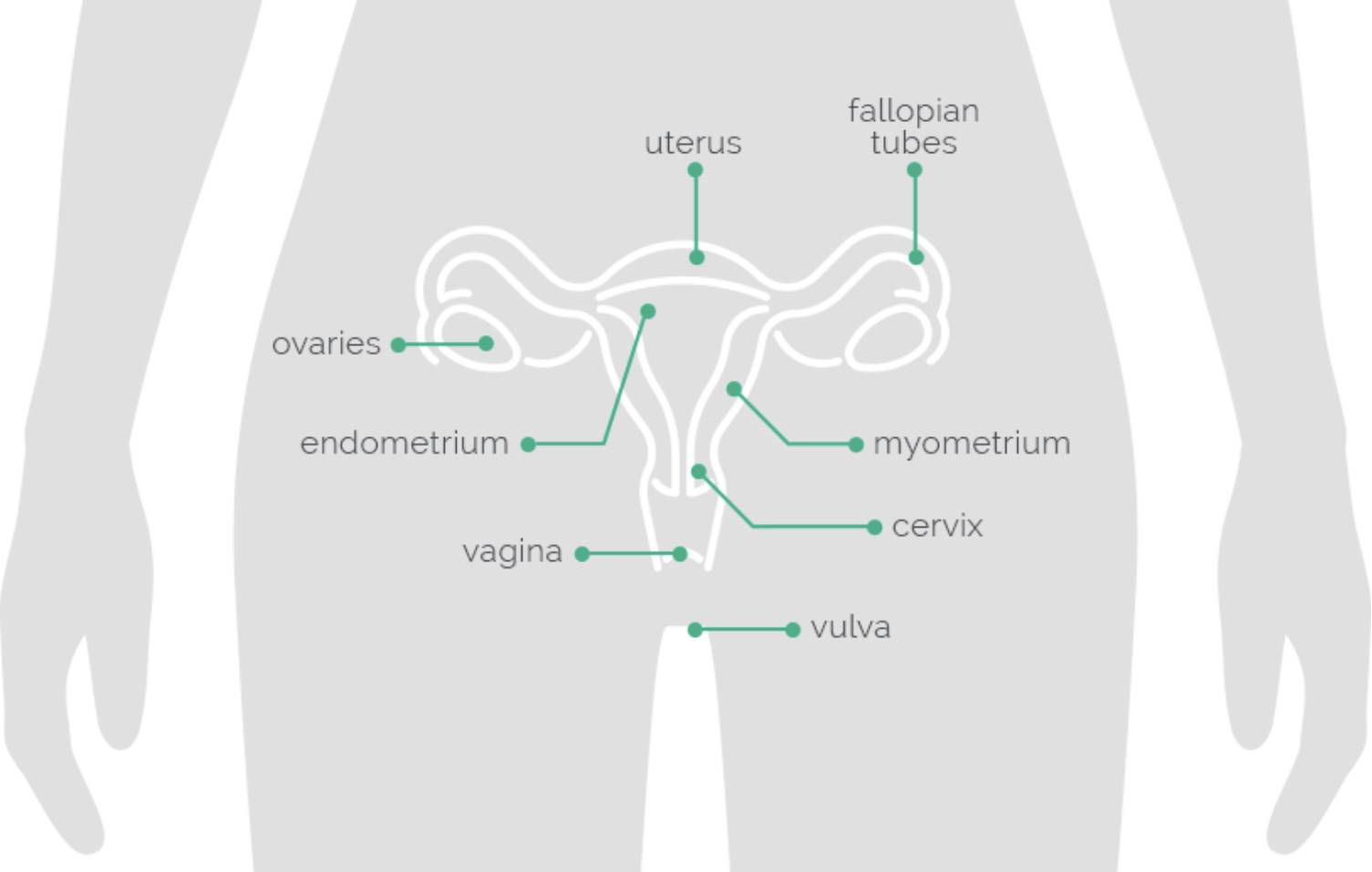
VULVAR CANCER
DESCRIPTION
The vulva is the external part of the female genitals, including the clitoris, the vaginal lips, the opening to the vagina, and the surrounding skin and tissue. Most vulvar cancers are squamous cell carcinoma.
This type of cancer begins in squamous cells (thin, flat skin cells) and is usually found on the vaginal lips. A small number of vulvar cancers are adenocarcinomas (cancers that begin in cells that make mucus and other fluids). This type of cancer is usually found on the sides of the vaginal opening.
Vulvar cancer usually forms slowly over a number of years. Abnormal cells can grow on the surface of the vulvar skin for a long time. This condition is called vulvar intraepithelial neoplasia (VIN).
SYMPTOMS
Signs and symptoms of vulvar cancer may include:
TREATMENTS
Vulvar cancer treatment usually involves surgery to remove the cancer and a small amount of surrounding healthy tissue. Sometimes vulvar cancer surgery requires removing the entire vulva. The earlier vulvar cancer is diagnosed, the less likely an extensive surgery is needed for treatment.
Surgery
Surgery used to treat vulvar cancer include:
Radiation therapy
Radiation therapy uses high-powered energy beams, such as X-rays, to kill cancer cells. Radiation therapy for vulvar cancer is usually administered by a machine that moves around the body and directs radiation to precise points on the skin (external beam radiation). Radiation therapy is sometimes used to shrink large vulvar cancers in order to make it more likely that surgery will be successful. If cancer cells are discovered in the lymph nodes, the doctor may recommend radiation to the area around the lymph nodes to kill any cancer cells that might remain after surgery.
Chemotherapy
For women with advanced vulvar cancer that has spread to other areas of the body, chemotherapy may be an option. Sometimes chemotherapy is combined with radiation therapy to shrink large vulvar cancers in order to make it more likely that surgery will be successful.
VAGINAL CANCER
DESCRIPTION
Vaginal cancer is a rare cancer that occurs in the vagina, the muscular tube that connects the uterus to the outer genitals. It most commonly occurs in the cells that line the surface of the vagina, which is sometimes called the birth canal. While several types of cancer can spread to the vagina from other places in the body, cancer that begins in the vagina (primary vaginal cancer) is rare.
Vaginal cancer is divided into different types based on the type of cell where the cancer began.
SYMPTOMS
Early vaginal cancer may not cause any signs and symptoms. It may be found during a routine pelvic exam and Pap test. As it progresses, vaginal cancer may cause signs and symptoms such as:
TREATMENTS
Treatment options for vaginal cancer depend on several factors, including the type of vaginal cancer and its stage. Treatment for vaginal cancer typically includes surgery and radiation.
Types of surgery that may be used to treat vaginal cancer include:
Radiation therapy uses high-powered energy beams, such as X-rays, to kill cancer cells. Radiation can be delivered externally or internally (brachytherapy) or both.
If surgery and radiation does not control the cancer, chemotherapy may be offered. It is unclear whether chemotherapy is useful for treating vaginal cancer and generally isn’t used on its own to treat vaginal cancer. Chemotherapy may be used during radiation therapy to enhance the effectiveness of radiation.
UTERINE/ENDOMETRIAL CANCER (GTD & SARCOMA)
DESCRIPTION
Endometrial cancer is a type of cancer that begins in the uterus, the hollow, pear-shaped pelvic organ in women where fetal development occurs. Endometrial cancer begins in the layer of cells that form the lining (endometrium) of the uterus. Other types of cancer can form in the uterus, including uterine sarcoma, but they are much less common than endometrial cancer.
SYMPTOMS
Endometrial cancer is often detected at an early stage because it frequently produces abnormal vaginal bleeding, which prompts women to see their doctors. Signs and symptoms of endometrial cancer may include:
CAUSE
Doctors don’t know what causes endometrial cancer. What’s known is that something occurs to create a genetic mutation within cells in the endometrium — the lining of the uterus. The genetic mutation turns normal, healthy cells into abnormal cells. Healthy cells grow and multiply at a set rate, eventually dying at a set time. Abnormal cells grow and multiply out of control, and they don’t die at a set time. The accumulating abnormal cells form a mass (tumor). Cancer cells invade nearby tissues and can separate from an initial tumor to spread elsewhere in the body (metastasize).
TREATMENTS
Options for treating endometrial cancer will depend on the characteristics of cancer, such as the stage, the patient’s general health and preferences. If endometrial cancer is discovered early, removing the uterus surgically often cures endometrial cancer. Other treatments include radiation therapy, chemotherapy, hormone therapy and biologic therapy. New types of targeted therapy are being tested in clinical trials. Please visit the National Cancer Institute (NCI) for more detailed treatment information about uterine cancer.
OVARIAN CANCER
Ovarian cancer begins in the ovaries, the reproductive glands on each side of the uterus that produce eggs and hormones. Ovarian cancer often goes undetected until it has spread within the pelvis and abdomen. At this late stage, ovarian cancer is more difficult to treat and is frequently fatal. Early-stage ovarian cancer, in which the disease is confined to the ovary, is more likely to be treated successfully.
The ovaries are made of three main kinds of cells. Each can develop into a different type of tumor:
SYMPTOMS
Early-stage ovarian cancer rarely causes any symptoms. Advanced-stage ovarian cancer may cause few and nonspecific symptoms that are often mistaken for more common benign conditions, such as constipation or irritable bowel. Signs and symptoms of ovarian cancer may include:
CAUSE
In general, cancer begins when a genetic mutation turns normal cells into abnormal cancer cells. Cancer cells quickly multiply, forming a mass (tumor). They can invade nearby tissues and break off from an initial tumor to spread elsewhere in the body (metastasize). A woman’s lifetime risk of developing breast and/or ovarian cancer is greatly increased if she inherits a harmful mutation in BRCA1 or BRCA2.
TREATMENTS
Standard treatment of ovarian cancer usually involves surgery, chemotherapy and/or targeted therapy. New types of treatment are being tested in clinical trials. Patients with any stage of ovarian cancer may want to think about taking part in a clinical trial.
Treatment generally involves removing both ovaries, the fallopian tubes, the uterus as well as nearby lymph nodes and a fold of fatty abdominal tissue (omentum) where ovarian cancer often spreads. Less extensive surgery may be possible if the cancer was diagnosed at a very early stage. For women with stage I ovarian cancer, surgery may involve removing one ovary and its fallopian tube.
After surgery, chemotherapy will likely be administered to kill any remaining cancer cells. Chemotherapy drugs can be injected into a vein or directly into the abdominal cavity or both. Chemotherapy may be used as the initial treatment in some women with advanced ovarian cancer.
Targeted therapy is a type of treatment that uses drugs or other substances to identify and attack specific cancer cells without harming normal cells. Targeted therapies are usually referred to as maintenance therapies to prevent recurrence although some may be given with chemotherapy during initial treatment and then continued after chemotherapy.
CERVICAL CANCER
DESCRIPTION
Cervical cancer occurs in the cells of the cervix — the lower part of the uterus that connects to the vagina. The most common type of cervical cancer is squamous cell carcinoma which begins in squamous cells (thin, flat skin cells) on the wall of the cervix. However, some cervical cancers are adenocarcinomas (cancers that begin in cells that make mucus and other fluids). While most cervical cancers are squamous cell carcinomas, both types of cells may be involved in cervical cancer in some instances. Very rarely, cancer occurs in other cells of the cervix.
SYMPTOMS
Early-stage cervical cancer generally produces no signs or symptoms. Signs and symptoms of more-advanced cervical cancer include:
CAUSE
It isn’t clear what causes cervical cancer, but it’s certain that various strains of the human papilloma virus (HPV), a sexually transmitted infection, plays a role. When exposed to HPV, a woman’s immune system typically prevents the virus from doing harm. In a small group of women, however, the virus survives for years, contributing to the process that causes some cells on the surface of the cervix to become cancer cells. HPV is very common, and most women with the virus never develop cervical cancer. This means other factors, such as environment and lifestyle choices, also determine whether a woman will develop cervical cancer.
TREATMENTS
Treatment for cervical cancer depends on several factors, such as the stage of the cancer, other health problems the patient may have and the patient’s preferences. Surgery, radiation, chemotherapy or a combination of the three may be used.
Screening
Cervical cancer that is detected early is more likely to be treated successfully. Most guidelines suggest that women begin screening for cervical cancer and precancerous changes at age 21. Women can reduce their risk of developing cervical cancer by having screening tests and receiving a vaccine that protects against HPV infection. Screening tests include the PAP test and the HPV DNA test.
Surgery
Early-stage cervical cancer is typically treated with surgery to remove the uterus (hysterectomy). A hysterectomy can cure early-stage cervical cancer and prevent recurrence. Minimally invasive surgery may be an option for early-stage cervical cancer.
Radiation
Radiation therapy uses high-powered energy beams, such as X-rays or protons, to kill cancer cells. Radiation therapy may be used alone or with chemotherapy before surgery to shrink a tumor or after surgery to kill any remaining cancer cells. Radiation may be given externally, internally or both.
Chemotherapy
Chemotherapy uses medications, usually injected into a vein, to kill cancer cells. Low doses of chemotherapy are often combined with radiation therapy, since chemotherapy may enhance the effects of the radiation. Higher doses of chemotherapy are used to control advanced cervical cancer that may not be curable.

Cancer is a group of diseases caused by a combination of genetic and environmental or behavioural factors. The Environment and Cancer Research Group seeks to investigate the role of different environmental factors and to identify novel therapeutic modalities.
 Email
Email
admin@gcrf.org.in
 Address
No: 26/8 1st Main Road, Tharapakkam, Chennai 600116
© 2022 Cancer Research Studies Centre. All rights reserved.